Mid-Autumn Turf Recovery: Optimizing Aquidneck Island Turf in October

The Critical October Transition Window
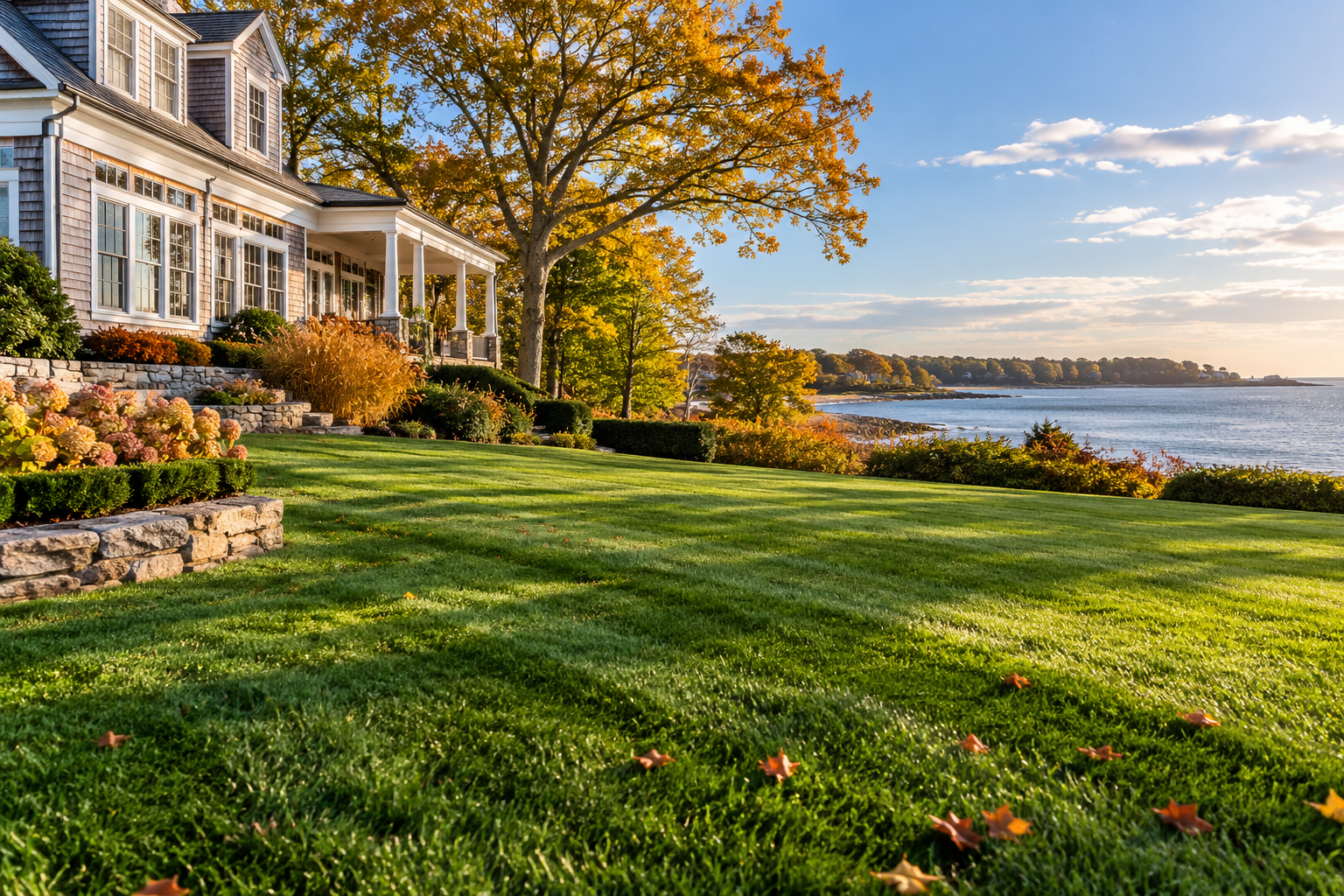
October on Aquidneck Island marks a crucial transition window for cool-season turfgrasses, including Kentucky Bluegrass, Perennial Ryegrass, and Fine Fescues. Following months of summer heat stress and early autumn weather shifts, October introduces cooler daytime highs (typically in the mid-50s to low-60s) and increasingly crisp coastal nights.
During October, a specific environmental condition defines Rhode Island’s coastal turf care: soil temperatures remain moderately warm (cooling into the optimal 50°F–58°F range), while ambient air temperatures drop significantly.
This temperature differential triggers a crucial physiological pivot. The warm soil stimulates aggressive subterranean root elongation, while the cooler air suppresses top-growth and reduces leaf transpiration. Turfgrass naturally redirects its metabolic energy away from vertical leaf blade extension and channels it straight into deep root expansion, lateral tiller development, and carbohydrate storage.
Failing to capitalize on this October developmental window limits your lawn’s ability to repair residual summer damage, leaving turf vulnerable to winter desiccation, snow mold, and frost injury.
Valterra’s October Turf Recovery Framework
Successfully fortifying a lawn ahead of late-fall frosts requires a structured, science-backed approach. At Valterra, we execute a specialized three-pillar fall recovery protocol engineered for the silty loam and clay-influenced coastal soils of Aquidneck Island.
1. Late-Season Aeration & High-Purity Over-Seeding
Summer foot traffic, coastal storms, and heavy maintenance equipment leave Aquidneck Island soils heavily compacted. Compacted soil restricts oxygen exchange, prevents moisture infiltration, and forms a physical barrier that stops roots from penetrating deeply.
- Mechanical Core Aeration: We extract thousands of soil cores across your property to fracture compacted sub-soil layers, open vital pore space, and break up thatch accumulation. This ensures oxygen, moisture, and root treatments penetrate deep into the root zone unobstructed.
- Targeted Over-Seeding: In early October, we seed using high-purity, elite cool-season turfgrass cultivars chosen specifically for cold tolerance, disease resistance, and salt-air resilience. Depositing seed directly into aeration cores ensures direct seed-to-soil contact for rapid germination before freezing temperatures arrive.
2. Strategic Mowing Height Transition
As daylight hours shorten rapidly throughout October, turf management must adapt to shifting growth rates. Leaving turf too tall entering late fall creates long, matted foliage that traps moisture beneath autumn leaf drop and snow cover, inviting destructive fungal pathogens such as pink and grey snow mold.
- Controlled Height Reductions: We incrementally lower cutting heights throughout October. This controlled reduction encourages lateral tillering—thickening the lawn canopy—while ensuring leaf blades remain short and upright to prevent matting under winter moisture loads.
3. Root-Centric Autumn Nutrient Management
Summer heat drains turfgrass of its essential energy reserves. Spring-focused, high-nitrogen fertilizers cannot compensate for fall nutrient deficiencies; October is when root systems absorb and store key minerals for long-term survival.
- Targeted Nitrogen Applications: We apply custom-balanced, slow-release nitrogen formulations that feed root tissue and root crowns rather than driving excessive top growth.
- Potassium & Micronutrient Fortification: High-potassium applications strengthen plant cell walls, improve cold-tolerance, and increase drought recovery. This targeted nourishment builds the carbohydrate reserves necessary for rapid spring green-up long before the spring thaw.
The Valterra Standard on Aquidneck Island
Managing coastal properties requires localized agronomic expertise. The unique microclimates of Newport, Middletown, Portsmouth, and Jamestown present distinct environmental challenges—from salt-laden ocean winds along coastal cliffs to heavy, moisture-retentive soils further inland.
At Valterra, we do not rely on generic, one-size-fits-all lawn treatment programs. Every property undergoes careful site evaluation to determine exact soil compaction levels, shade patterns, and turf health profiles. This proactive, science-backed execution is precisely why Valterra remains a premier, trusted landscaping authority across Aquidneck Island.
Prepare Your Lawn for Its October Reset
The agronomic work completed during this vital October window dictates how your lawn endures the coming winter and performs next spring. Proactive fall care establishes a deep, resilient root foundation that withstands winter stress and yields a dense, vibrant green canopy come April.
Is your property fully prepared for its fall recovery? Call (401) 855-3908 today to schedule a comprehensive property walkthrough with our expert agronomic team.
Recent Posts